
Docs · Glidepath
Architecture
A current-state overview for people running the platform, not writing pipelines against it. For any specific decision’s rationale, see adr/.
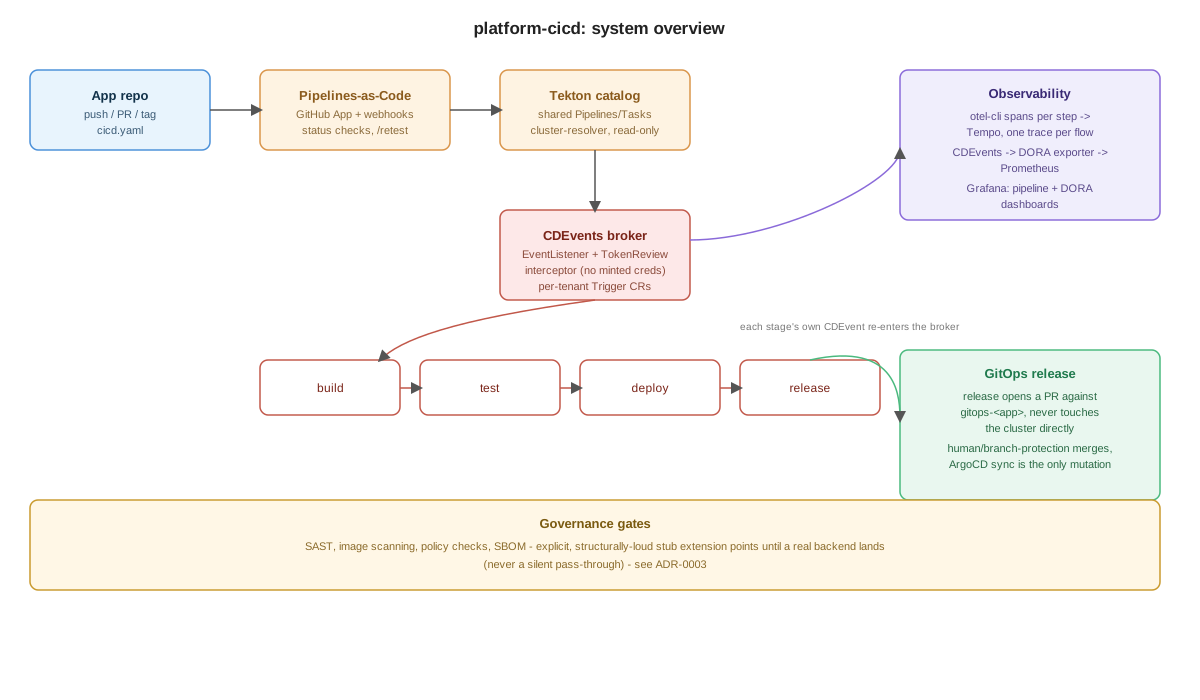
Two triggering mechanisms, one deliberate split
Git-sourced events (push, PR, tag, release, PR-comment ChatOps) are owned entirely
by Pipelines-as-Code. Its GitHub App handles webhook auth and PR status checks
natively. Each app repo needs a small, platform-generated .tekton/*.yaml boilerplate
file - never hand-written.
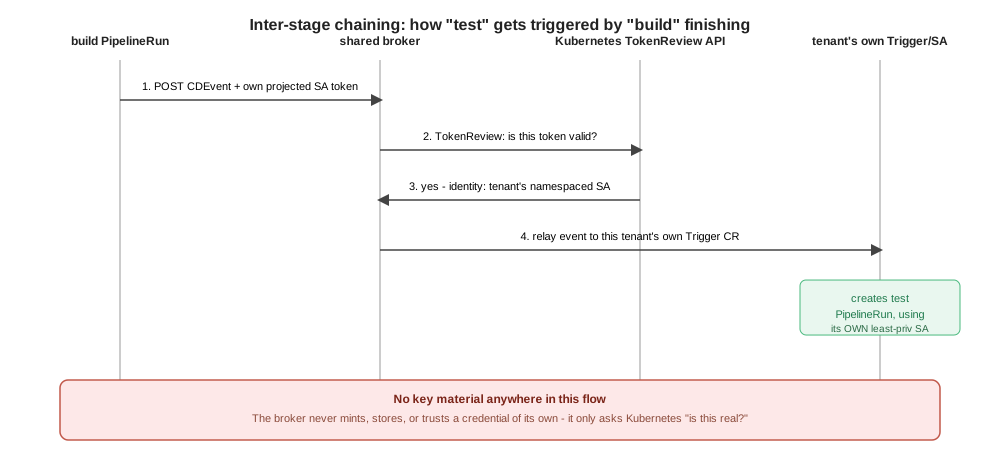
Inter-stage chaining (build finished → start test; test passed → start deploy)
isn’t a git event, so PaC doesn’t cover it. A shared internal broker
(platform/broker/) relays CDEvents between independently-triggered PipelineRuns,
authenticated via each pod’s own Kubernetes-issued ServiceAccount token (TokenReview)
rather than a platform-minted credential - see chaining.md and
ADR-0002.
Tracing
Every pipeline step emits an OpenTelemetry span (otel-cli, wrapped in
catalog/lib/otel.sh), stitched into one Tempo trace per end-to-end flow even though
each stage is a separate PipelineRun. A W3C traceparent is established once per flow
and threaded through CDEvent payloads to every subsequent stage. See
tracing.md.
Governance
SAST, image scanning, policy checks, and SBOM attestation are real, enforcing gates today - not placeholders. Each reports as an independent, required GitHub status check on a release PR. See governance-stubs.md and ADR-0003 for why these are built as explicit, structurally-loud extension points rather than a single opaque “governance passed” bit.
Release: GitOps-only
release never touches a target cluster directly. It opens a PR against a dedicated
gitops-<app> repo; a human/branch-protection rule merges it; ArgoCD’s own sync is the
only thing that ever mutates the cluster. See release.md and ADR-0004.
Multi-cluster
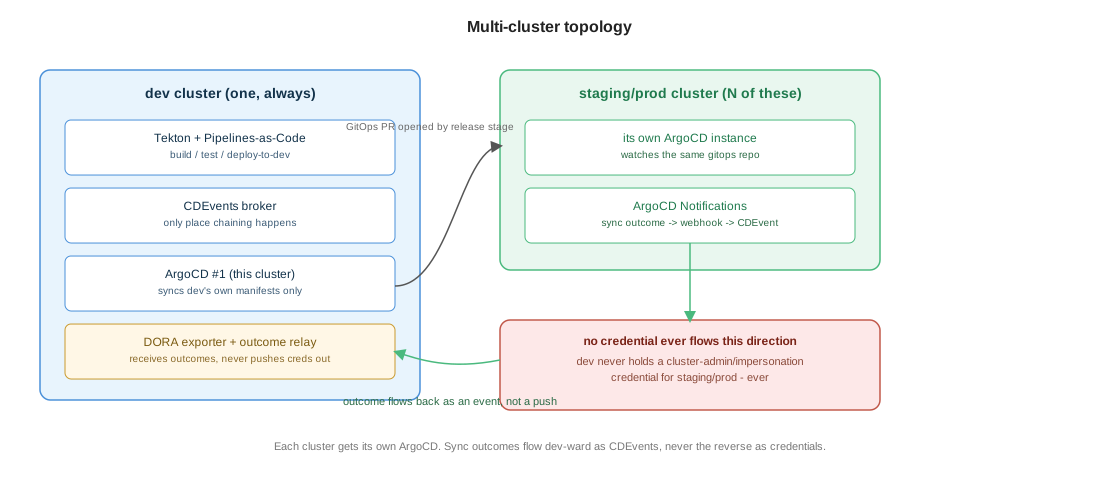
Only the dev cluster runs Tekton/PaC/the broker. Staging/prod clusters each get their own ArgoCD instance watching the same gitops repo - never a shared/remote-cluster credential from dev. Sync outcomes flow back to dev as CDEvents (via ArgoCD Notifications → a webhook → a relay service), not as a push in the other direction. See multi-cluster.md and ADR-0005.
Cluster-agnostic bootstrap
Every cluster installs the same way: a declarative ArgoCD Application, consuming a
per-cluster values file produced by hack/generate-cluster-values.sh, never
hand-typed. Cluster-specific state (Fulcio trust root, cluster CA) lives in that
cluster’s own gitops-cluster-<name> repo, never inside platform-cicd itself. See
installation.md and ADR-0006.
Security model
No cluster-admin, no broad SA impersonation, anywhere - every tenant gets namespace-scoped RBAC only, and the shared broker authenticates callers via TokenReview instead of trusting a bearer token it minted itself. See security.md for the full model end to end (RBAC, supply chain, secrets, multi-cluster boundaries, and known/accepted gaps) - this page only covers the piece directly relevant to chaining.